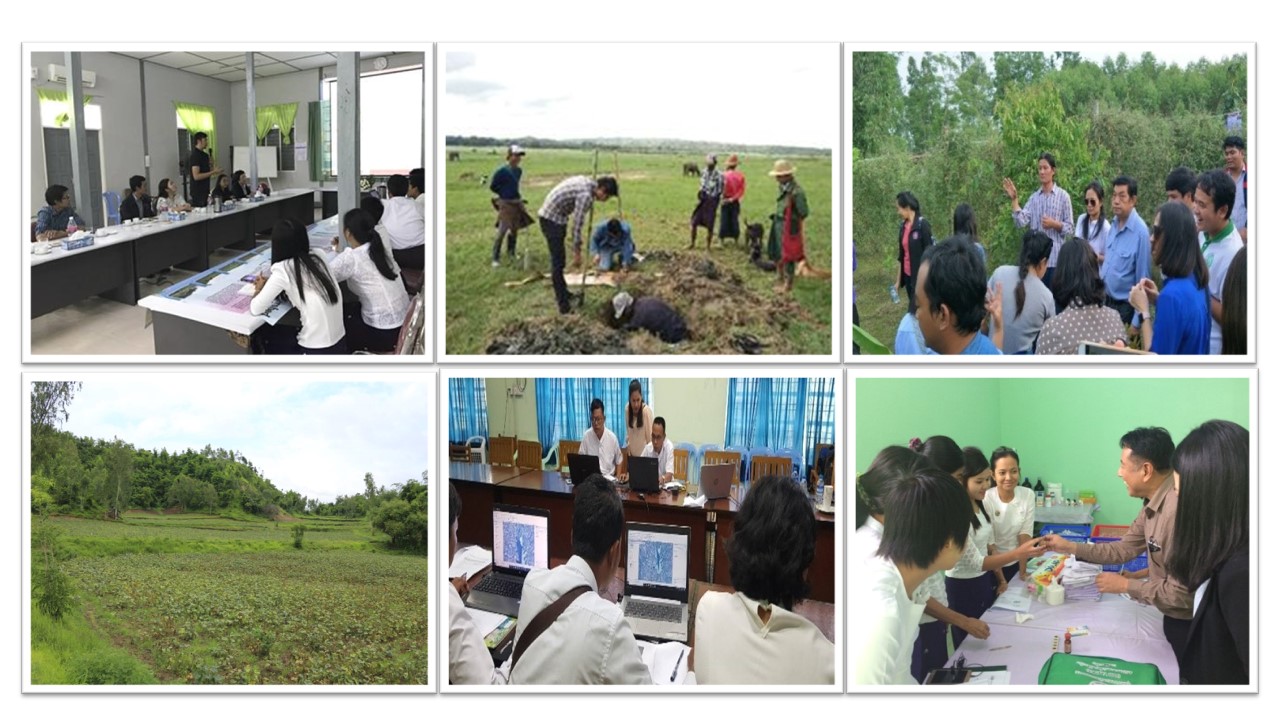
The cooperation under the ACMECS project has been progress since 2004. In 2015, after the ASEAN Economic Community was established, there has been a change in the regional and national economic structure where countries around the world have also emphasized the importance of soil resources and sustainable of land use. LDD has adjusted its strategies and plans to reflect current global and regional events and emphasized on raising awareness of the importance of sustainable soil resources. The framework of ACMECS for land development during the year 2017-2021 consists of 4 main strategies, namely soil resource database preparation and land use planning, use of technology for land development, building personnel capacity, and support a network on land development establishment.
1. Cooperation between Thailand and Lao PDR
The project implementation between the Land Development Department, Thailand and the Department of Agriculture Land Management (DALaM) are in line with the operational strategy as follows:
1.1 Soil resource database preparation In 2017, Lao PDR staff joined two training workshops, namely Satellite Image Interpretation and Land Use Mapping for ACMECS Project and Soil Survey and Information System for Watershed Management. This helped to develop personnel capacity in soil surveying and soil information management. Subsequently, the study area was chosen for project implementation in the Nammang Watershed, Huai Nam Hai sub-watershed, Tha Phabad city, Bolikasai Province, Lao PDR, along with surveying, collecting, and studying preliminary data and then determine an action plan and create a soil database.
1.2 Land use planning In 2018, the implementation of the ACMECS focused on area analysis for land use planning, including the preparation of land units, land use, physical land quality assessment, and thus land use planning. Then, land use measures was suggested in accordance with the land potential and available resources as well as being able to increase efficiency sustainable and sustainable use of resources in the watershed. In addition, there was workshop on sustainable agricultural land use planning.
1.3 Use of technology for land development In 2019, the implementation of the ACMECS focused on the training on soil fertility assessment, soil improvement and the use of biotechnology for soil improvement as well as making plans for the transferring knowledge to develop farmer’s skills on land development. In addition, the Lao PDR has been working on transferred knowledge to both officials and farmers in the study area in several topics e.g. soil sample collection, use of green manure crops, volunteer soil doctor program and application of soil test kit for field soil fertility assessment, and composting and bio-fermented extract production.
1.4 Support network establishment Lao PDR officials, along with two other countries, attended a study visit volunteer soil doctors in the Khao Hin Son Royal Development Study Center, Chachoengsao province and the Volunteer Soil Doctor Learning Center in Chachoengsao and Rayong provinces. The Lao PDR staff has brought the knowledge gained from the tour to develop a network of soil doctors, demonstration centre and a model farmer/volunteer soil doctor in their pilot area.
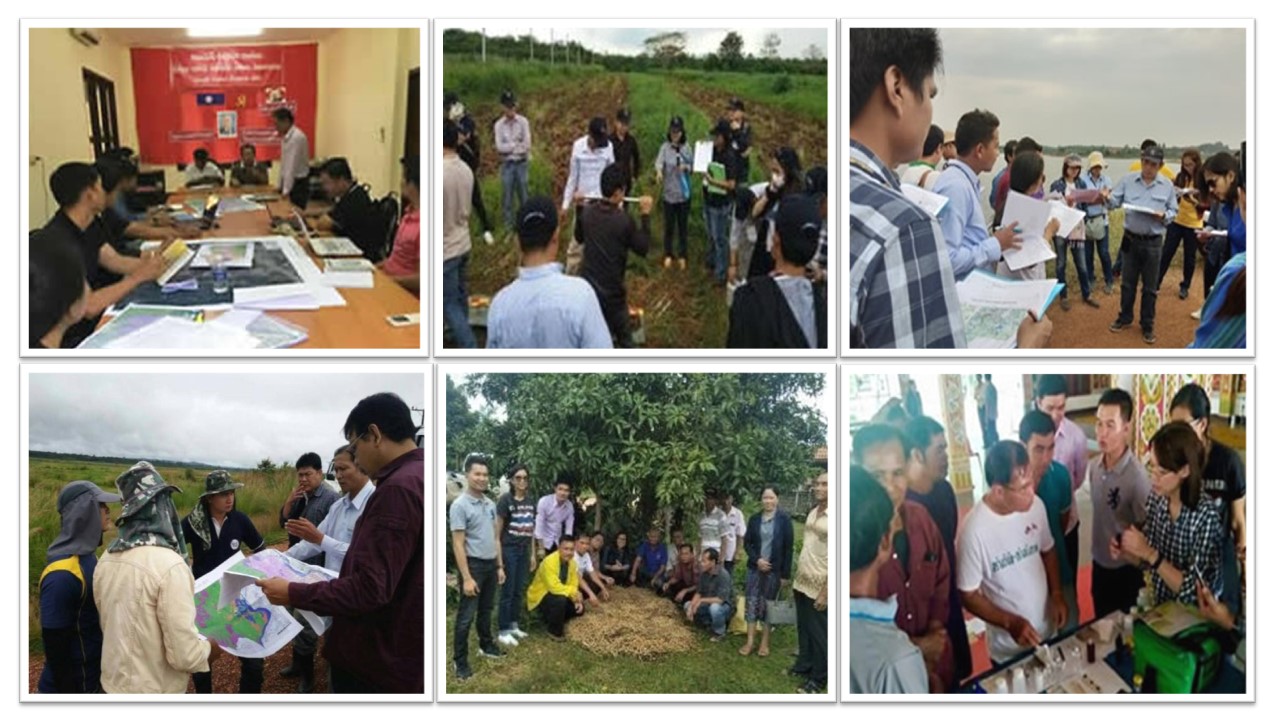
2. Cooperation between Thailand and Cambodia
2.1 Soil resource database preparation In 2017, Cambodia staff joined two training workshops, namely Satellite Image Interpretation and Land Use Mapping for ACMECS Project and Soil Survey and Information System for Watershed Management. This helped to develop personnel capacity in soil surveying and soil information management. Subsequently, Baan Rasmi – Samakkhi, Prek Thnot watershed, Kampong Speu Province, Cambodia was selected as a pilot area for ACMECS implementation. This area was later surveyed to collect data and studying preliminary data as well as an identified action plan and created a soil database of the area.
2.2 Land use planning In 2018, the implementation of the ACMECS focused on area analysis for land use planning in the Ban Rasami-Samakhi, Prek Thnot watershed. The activities are divided into 5 sub-activities, namely: 1. Preparation of a land use plan; 2. Presentation of the draft land use plan; 3. Interviewing and data collection; 4. Presentation of land use plans for revision; and 5. to propose a complete land use plan. In addition, the staff from Cambodia joined a workshop on sustainable agricultural land use planning.
2.3 Use of technology for land development In 2019, the implementation of the ACMECS focused on the training on soil fertility assessment, soil improvement and the use of biotechnology for soil improvement as well as making plans for the transferring knowledge to develop skills of officials on land development.
2.4 Support network establishment Lao PDR officials, along with two other countries, attended a study visit volunteer soil doctors in the Khao Hin Son Royal Development Study Center, Chachoengsao province and the Volunteer Soil Doctor Learning Center in Chachoengsao and Rayong provinces. The Cambodia staff has expected to transfer the knowledge gained from the tour to develop a network of soil doctors/farmers and demonstration centre in their pilot area.
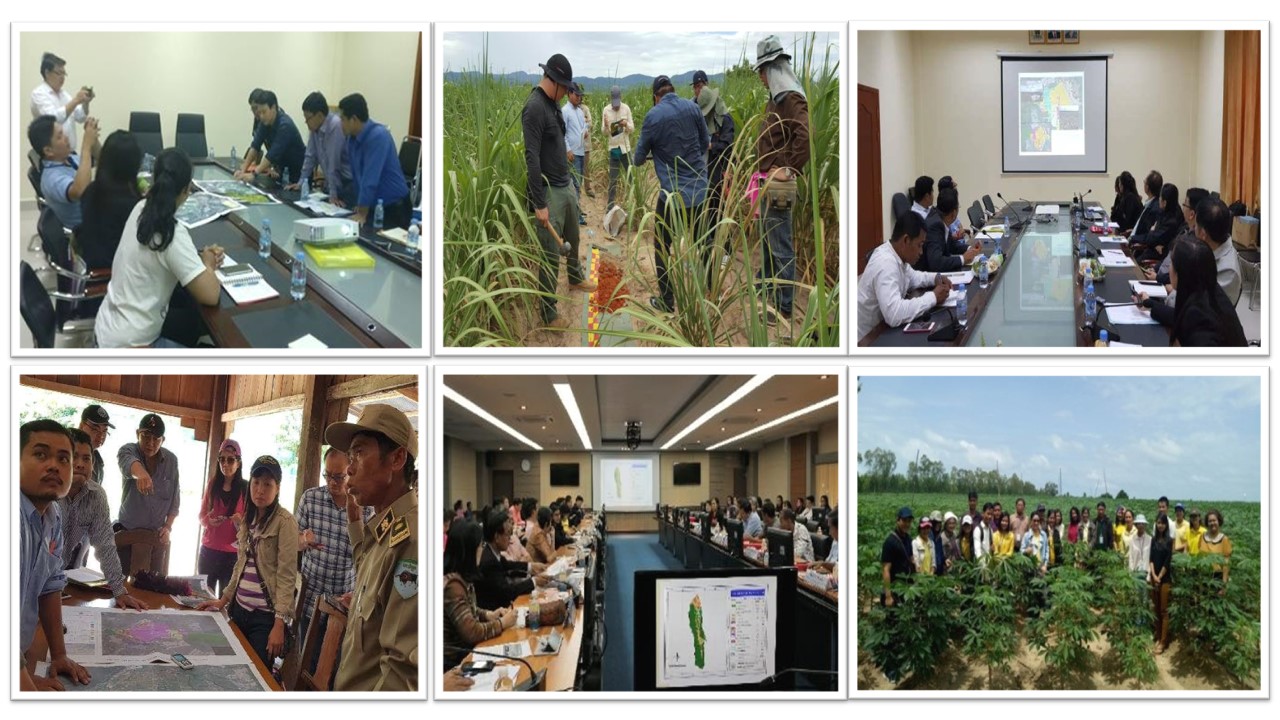
3. Cooperation between Thailand and Myanmar
3.1 Soil resource database preparation In 2017, Myanmar staff joined two training workshops, namely Satellite Image Interpretation and Land Use Mapping for ACMECS Project and Soil Survey and Information System for Watershed Management. This helped to develop personnel capacity in soil surveying and soil information management. Subsequently, Sin Thay Sub-watershed in Nay Pyi Taw city, Myanmar was selected as a pilot area for ACMECS implementation. This area was later surveyed to collect data and study preliminary data as well as an identified action plan and then created a soil database of the area.
3.2 Land use planning In 2018, the implementation of the ACMECS focused on area analysis for land use planning in the Sin Thay Sub-watershed in Nay Pyi Taw city. The activities included assessing the quality of land according to the map unit, processed in land use plan that corresponds to the potential of the area, verify the accuracy of the draft field land use plan in the Sin Thay Sub-watershed and finally collected additional socio-economic data. In addition, the staff from Cambodia joined a workshop on sustainable agricultural land use planning.
3.3 Use of technology for land development In 2019, the implementation of the project focused on the transfer of knowledge and technology for soil fertility assessment, soil improvement and the use of biotechnology for soil improvement as well as making plans for the implementation. In addition, the Myanmar received additional training in their own country in soil fertility assessment at the local level with a field soil test kit, production of bio-fermented substances for agricultural use, production and storage biotechnology, development and improving soil databases and producing land use maps.
3.4 Support network establishment Lao PDR officials, along with two other countries, attended a study visit volunteer soil doctors in the Khao Hin Son Royal Development Study Center, Chachoengsao province and the Volunteer Soil Doctor Learning Center in Chachoengsao and Rayong provinces. The Cambodia staff has expected to transfer the knowledge gained from the tour to develop a network of soil doctors/farmers and demonstration centre in their pilot area.